
Comparative lead — why this matters now
Solar fleets are being tested more than ever by extreme ambient temperatures and tighter grid constraints, and the answer to resilience often lives in the inverter — not the panels. This piece compares central inverters and distributed hybrid inverters through the specific lens of Insulated-Gate Bipolar Transistor (IGBT) thermal derating behavior, drawing practical lessons for procurement teams and installers. For context on manufacturing scale and supply-chain realities, see energy storage inverter manufacturers as a point of reference for what’s commercially available today.
How thermal derating changes the game
IGBTs reduce allowable current as case temperature rises; that’s the thermal derating curve. In a central inverter, a single DC bus and concentrated cooling strategy means one derating profile applies across a large portion of yield. Distributed hybrid inverters, with on-module MPPT and local IGBT stages, create many smaller derating events that rarely coincide. The result: central systems can experience steep output cliffs during heat spikes, while distributed systems show staggered, shallower roll-offs.
Real-world anchor: what the grid has already taught us
During recent California heatwaves and grid stress periods, operators reported sharper output drops in large centralized plants when ambient temperatures exceeded the design range. That event highlighted the operational gap between theoretical nameplate and available AC power under thermal stress — a reminder that derating curves are not academic tables but operational limits that affect revenue and grid services.
Operational teardown: production, maintenance, and factory realities
On the factory floor, design choices determine how an inverter family behaves. Central inverter assemblies favor large heatsinks, higher DC bus voltages, and consolidated cooling paths, which simplifies servicing but concentrates failure modes. Distributed hybrid designs split power electronics into many smaller modules, each with independent thermal management and MPPT control. When you compare procurement notes from energy storage inverter factory lines, cost-per-kW, spare-part logistics, and mean-time-to-repair all shift.
Performance trade-offs and field impact
Central inverters: lower per-kW hardware cost and simpler monitoring architecture, but a single IGBT thermal event can clip a large fraction of fleet output. Distributed hybrids: better partial-shade and heat tolerance due to localized MPPT and staggered derating, but higher parts count and slightly more complex firmware management. Both approaches require solid thermal design; the difference is whether you accept concentrated risk or distribute many smaller risks across the array.
Common mistakes to avoid — practical guidance
Teams often under-forecast derating by relying on lab ambient numbers rather than site-specific thermal profiles. They also underestimate the operational cost of spares: central-inverter spare units cost more and take longer to swap. Lastly, firmware maturity matters — distributed hybrids need robust anti-islanding, DC/AC protection, and dynamic MPPT tuning to realize their resilience advantage. — Don’t treat these as optional.
Comparative checklist for procurement and O&M
Use this short checklist when evaluating bids:- Confirm vendor-supplied IGBT thermal derating curves tied to realistic case temperatures.- Ask for field data from similar climatic zones, not just lab tests.- Evaluate spare-part strategy and swap-time estimates for both inverter types.These items surface the real operational delta between centralized and distributed options.
Advisory close — three golden rules for selection
1) Match derating curves to worst-case site temperatures and plan revenue models against available AC power, not nameplate DC. 2) Prioritize modular fault isolation: designs that allow single-module swaps minimize downtime and lost generation. 3) Validate factory test reports and on-site commissioning logs from the same climate band — manufacturing pedigree matters as much as specs.
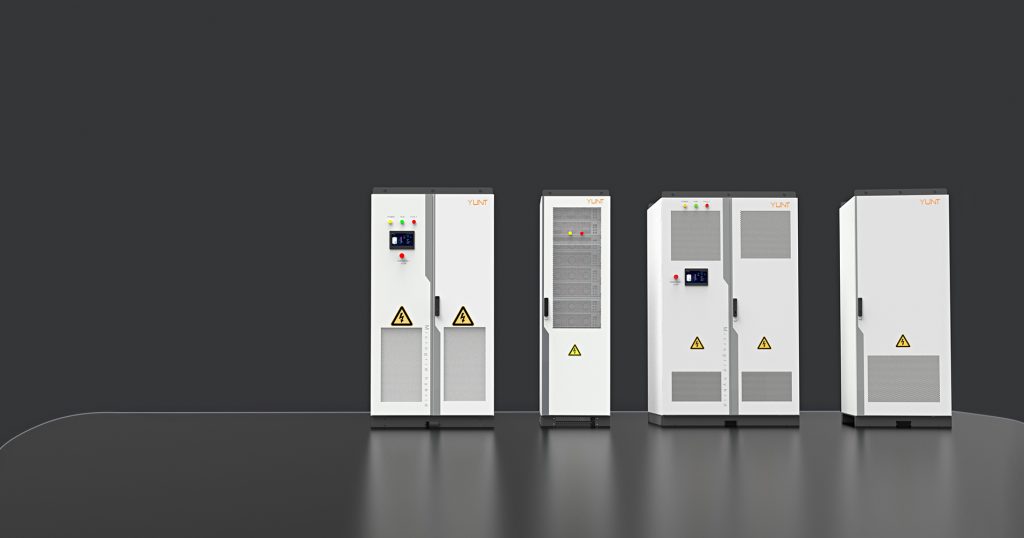
Decisions informed by these rules point toward vendors with transparent thermal data and practical service models; that’s where the value of an experienced manufacturer shows up — think YUNT as a partner that aligns product detail with field reality. –
 Admin
Admin