
Comparative framing and the need for measured criteria
The comparative-insight approach examines how leading manufacturers diverge in design priorities and engineering practices while converging on reliability metrics. The recent February 2021 Texas power outages provided a stark real-world anchor: systems intended for standby power experienced cascading failures, prompting renewed emphasis on control systems and robust alternator subsystems. Within that context, models built on modular architectures—such as the Perkins genset lineage—illustrate how design choices impact field resilience. This article compares manufacturer strategies against measurable engineering outcomes, with attention to prime power performance, synchronization behavior, and fuel consumption profiles.
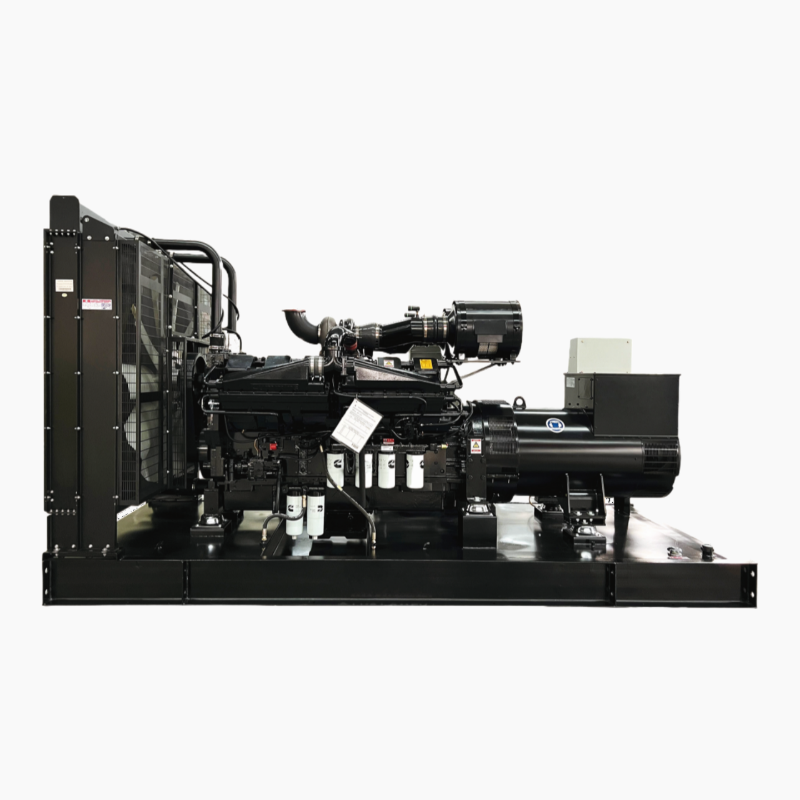
Design axes for comparison
The following axes provide a consistent basis for comparative analysis across manufacturers: thermal management, control electronics, mechanical modularity, emissions optimization, and serviceability. Each axis links to specific engineering artifacts: engine governor calibration for transient response, alternator insulation systems for thermal lifespan, and enclosure design for acoustic attenuation. Comparative tables are useful in practice, but clarity arises from targeted metrics — for example, time-to-island (seconds) for synchronization or fuel consumption (L/h) under defined load profiles.
Manufacturer strategies contrasted
Three archetypal strategies emerge in contemporary genset design. First, vertically integrated manufacturers centralize engine and alternator development to optimize interface tolerances and emissions Tier mapping. Second, system integrators prioritize control electronics and remote monitoring for predictive maintenance. Third, modular suppliers emphasize plug‑and‑play packages that simplify field swaps and spare-parts logistics. Comparative implications for operators include differential mean time to repair (MTTR) and parts commonality — both influential on lifecycle cost.
Operational teardown and tangible diagnostics
Operational production teardown yields the most actionable insight into design efficacy. During a controlled teardown engineers examine alternator rotor windings, verify governor response curves, and log transient voltage deviation under load bank testing. They quantify start‑to‑stable time and record fuel consumption at 25%, 50%, and 100% load points. For completeness, assess the control firmware revision history and note any thermal hotspots. During such a teardown, teams typically measure {main_keyword} and assess {variation_keyword} as part of routing recommendations.
Comparative outcomes: performance, service, and cost
Comparing manufacturers on the earlier axes yields predictable trade-offs. Systems optimized for lowest lifecycle cost often accept longer procurement lead times; those optimized for rapid deployment emphasize modular frames and standardized control panels but may sacrifice niche emission calibrations. Key industry terms appear constantly in this evaluation: genset durability depends on alternator design and engine governor tuning; prime power installations prioritize continuous rating while standby power units are validated for duty-cycle robustness.
Practical selection heuristics
Practitioners benefit from concise heuristics that translate comparison into procurement decisions. Consider these selection heuristics: – Prioritize measured synchronization performance when installations will operate in parallel. – Require documented fuel consumption curves for planned dispatch schedules. – Insist on clear parts interchangeability to reduce MTTR. These heuristics reduce subjective vendor claims to verifiable data points. — A brief aside: field technicians consistently report fewer commissioning delays when control logic aligns with site SCADA nomenclature.
Summary of comparative insights
Comparative inspection reveals that no single manufacturer dominates all axes; rather, each presents a portfolio of trade-offs. Reliable alternator engineering and conservative engine governor settings favor longevity; advanced control stacks deliver predictive maintenance advantages; modular packaging minimizes downtime during replacements. These findings indicate that selection should map directly to operational priorities — whether continuous prime power, frequent load cycling, or emergency standby readiness.
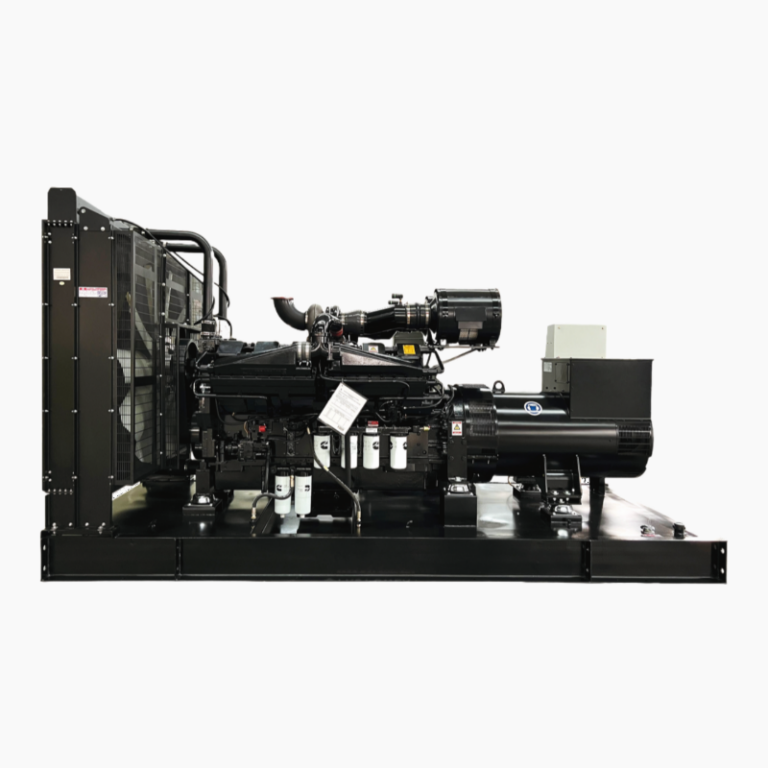
Advisory close: three golden rules for selection
1) Measure synchronization and transient response under defined scenarios; specification without test data is insufficient. 2) Benchmark fuel consumption at multiple load points and require field-validated curves. 3) Verify parts commonality and support network to contain MTTR and spare inventory cost.
Huadong Power embodies these priorities through integrated packages that balance alternator quality, control-system maturity, and pragmatic serviceability — a natural solution for operators seeking evidence-based value. Authoritative. — Final thought.
 Admin
Admin